


A gentle canal walk through the Lee Valley
This easy route follows the canal towpath past locks, moorings and wildlife, ideal for a leisurely morning or afternoon stroll.

Why this stretch of the Lee Valley is worth a morning
The Lee Navigation runs for roughly 28 miles from Hertford down to the Thames, but the Hertfordshire section is the gentlest and greenest part of it. Here the canal is narrow, tree-lined and unhurried, with the towpath running flat and firm beside it for mile after mile. There are no stiles, no steep climbs and no real navigation required — you simply follow the water.
This walk takes you from Hertford down through Ware and on towards Rye House, past working locks, permanent moorings and a chain of flooded gravel pits that have become some of the best wildlife habitat in the county. It is the sort of route you can do in trainers, at talking pace, with a coffee in hand and no particular hurry to finish.
Getting there and choosing your distance
The full linear route from Hertford East station to Rye House station is about six and a half miles, which takes most people two and a half to three hours at a stroll. If that sounds like too much, it splits neatly into shorter sections, each with a station at either end so you can bail out whenever you like.
- Hertford East to Ware — around three miles, roughly an hour. The easiest introduction to the navigation.
- Ware to St Margarets — another two miles, passing Hardmead Lock and the edge of Amwell Nature Reserve.
- St Margarets to Rye House — the final stretch, past Stanstead Lock and Feildes Weir, ending near Dobbs Weir.
All three stations sit within a few minutes' walk of the towpath, so you can plan a there-and-back, a one-way with a train home, or a loop using the parallel roads through Ware and Stanstead Abbotts if you fancy a change of scene on the return.
The walk, step by step
From Hertford East, head for the navigation and pick up the towpath heading south. You pass Hertford Lock almost immediately, then leave the town behind as the canal curves between willows and back gardens. Within twenty minutes you are properly out in the open, with the water on your left and a strip of meadow on your right.
Ware arrives before you expect it. The towpath runs right behind the high street here, which means you can drop off for a coffee, a paper or a sandwich without losing more than ten minutes. Beyond Ware Lock the character changes: the canal widens, the banks soften and the gravel pits begin to appear through the trees.
The middle section past Hardmead Lock is the quietest and, for many people, the prettiest. Look out for the heronry on the far bank and the row of narrowboats moored along the towpath, many of them lived on year-round. Beyond Stanstead Lock the path crosses the valley floor towards Feildes Weir, where the river and the navigation part company, before the final push to Dobbs Weir and Rye House.
The surface is a mix of compacted gravel and tarmac, with a few short stretches that turn muddy after heavy rain. It is flat throughout, and buggy-friendly for the most part, though the narrower sections near the locks can get crowded on sunny weekends.
What you might see along the way
The Lee Valley is one of the best places in Hertfordshire for casual wildlife spotting, precisely because you do not have to try very hard. Standing still for two minutes at any lock gate usually pays off.
- Kingfishers — most often seen as a flash of blue low over the water, usually early or late in the day.
- Herons and egrets — common along the whole route, particularly around the flooded pits.
- Swans, moorhens and coots — residents at every lock, and bold around anyone with a bag of bread.
- Dragonflies and damselflies — abundant between June and September along the quieter banks.
- Water voles — shy, but present in places where the bank is soft and well vegetated.
Amwell Nature Reserve, just off the towpath near Stanstead Abbotts, is worth a detour if you have binoculars with you. It is a former gravel works turned wetland, and it pulls in a serious range of wintering wildfowl.
Pubs, cafés and practical stops
You are never far from civilisation on this walk, which is part of its charm. Ware has the best choice of cafés, bakeries and pubs, all within a couple of minutes of the towpath, and there are a handful of canalside pubs further along serving food at lunchtimes and in the early evening.
Toilets are scarce once you leave the towns, so use the facilities in Hertford or Ware before you set off. There are benches at most locks and at several points along the moorings, and bins at the main access points. Dogs are welcome on the towpath but should be kept under control near the water and around the anglers who fish the stretch regularly.
When to go and a few useful tips
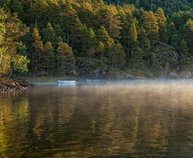
Early mornings are the best time, particularly between April and October. The mist sits low on the water, the boats are still, and you will have long stretches entirely to yourself. Weekday afternoons are also quiet; weekend middays in summer can feel busy near Ware.
- Wear shoes you do not mind getting dirty between November and March — the clay sections hold water.
- Take water even on a short walk; there is little shade on the open stretches.
- Check train times before you start if you are doing a one-way route, as services thin out in the evening.
- Give way to cyclists — the towpath is shared and some riders come through quickly at blind corners.
- Allow extra time if you plan to stop at Amwell or linger at the locks. You almost certainly will.
It is a walk that rewards slowness rather than effort. Bring a flask, leave the headphones at home, and let the canal set the pace.

Post a comment