


Finding a pub garden with shade on a hot day
Discover how to find a pub garden that offers dappled shade, comfortable seating and a gentle breeze on the hottest afternoons.

Good shade is dappled, moving and high
On a genuinely hot Hertfordshire afternoon — the sort where the thermometer nudges past 28°C and the tarmac softens underfoot — the difference between a pub garden with shade and a pub garden with good shade is the difference between a pleasant few hours and a slow roast. A single parasol over a metal table creates a hot, still pocket of air. A mature lime, horse chestnut or oak gives you something far better: dappled light, a patch of cool that shifts as the sun tracks round, and a canopy high enough that the heat rising off baked ground has somewhere to go.
So when you are planning a summer afternoon out, don't just ask whether a garden has shade. Ask what kind, where it falls, and what time of day it lands there. Those three questions will do more for your comfort than any amount of forward planning about menus or parking.
Work out which way the garden faces first
This is the most useful thing you can establish before you leave the house, and it takes about thirty seconds with a map. A north-facing garden, or one that sits on the north side of its building, holds shade for most of the day and is the safest bet in a heatwave. An east-facing garden is lovely at midday and pleasantly shaded by mid-afternoon. A west-facing garden is the classic trap: it looks inviting at noon and becomes unbearable by four o'clock, precisely when you have settled in and ordered a second round.
Hertfordshire's shape helps more than you might expect. Gardens on the valley sides of the Lea, the Mimram, the Beane, the Rib and the Chess tend to catch a through-draught that flat, sheltered plots miss. Pubs on higher ground — the fringes of the Chilterns around Tring and Berkhamsted, the open lanes near Royston and Therfield — often pick up a breeze that a garden tucked behind a high street simply never receives. Gentle air movement is worth several degrees of perceived heat.
The local advantage: water, chalk and old trees
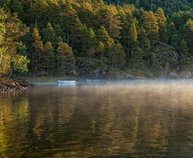
Riverside and canal-side gardens are the connoisseur's choice on a hot day. Anywhere along the Lea near Hertford and Ware, the Stort at Bishop's Stortford, or the Grand Union around Berkhamsted and Tring, you get evaporative cooling off the water, plus willows and alders whose leaves filter light into a soft green haze. The drop in temperature as you step towards the bank can be startling.
Next best are the old commons and heaths — Chorleywood Common, Nomansland Common, Therfield Heath, Bricket Wood — where the treeline is not clipped hedging but tall, established timber that has been casting shade for a century or more. Churchyards and abbey fringes are another quiet winner: yews and limes planted long ago, deep soil, and very little paving to store heat. If a garden backs onto woodland edge, as some do near Ashridge, Whippendell Woods, Broxbourne Woods and Heartwood Forest, you have found somewhere genuinely comfortable.
A quick checklist for the moment you arrive
Walk the garden before you choose a table. Two minutes of scouting saves an hour of regret.
- Look at the ground, not the sky. Bare earth, gravel and decking radiate heat back at you. Long grass, leaf litter and stone flags stay noticeably cooler.
- Test the seating. Wooden benches and slatted chairs remain comfortable; dark metal and black plastic soak up sun and hold it.
- Hunt for the breeze. Fan your hand near a gap in the hedge, an open gate or the corner nearest water. That is where you want to sit.
- Check the parasols. Are they fixed in place or can staff tilt them? Is there a wall or pergola edge casting a reliable shadow of its own?
- Ask. Whoever is behind the bar knows exactly where the shade falls at three in the afternoon. It is the single most reliable piece of local knowledge available.
Timing beats everything else
Arrive before noon and you will have your pick of the shaded tables. Between one and four is the punishing stretch, when even a well-leafed canopy starts to feel thin and the breeze drops away. Mid-afternoon sun is also the most direct, so anything with a slight gap above it becomes a problem.
Early evening is the sweet spot on a hot day. The air has warmed up without becoming oppressive, the sun sits low enough that hedges cast long shadows, and a west-facing garden that was unbearable at four becomes the best seat in the county by seven. Midweek afternoons in July and August are reliably quiet; on a bank holiday weekend the good shaded tables go by half past twelve, so plan accordingly or aim for an early lunch.
Comfort is about more than temperature
Small practicalities matter. Take a hat and water even for a short visit, and remember that shade moves — what was dappled at two o'clock may be full sun at four. Sitting with your back to the shade and your feet in it is often cooler than the reverse, and a table under a tree at the edge of a garden will beat one in the middle every time.
If you want to stretch the afternoon, look for gardens with a footpath at the bottom of the plot. A short shaded wander through a wooded lane or along a towpath lets you cool down properly before heading home, and it turns a simple pub stop into a proper day out. Walk first, eat in the shade afterwards, and you will have cracked the hottest afternoons Hertfordshire can throw at you.

Post a comment